SUSTAINABILITY
The EU Greenlights Blockchain for CSRD
In an eco-friendly plot twist, the EU has rolled out the Corporate Sustainability Reporting Directive (CSRD) -- a blueprint that's got big companies talking about more than just profits.
SL
Sam Liddell
Content Lead
August 27, 2024
Unpacking The CSRD
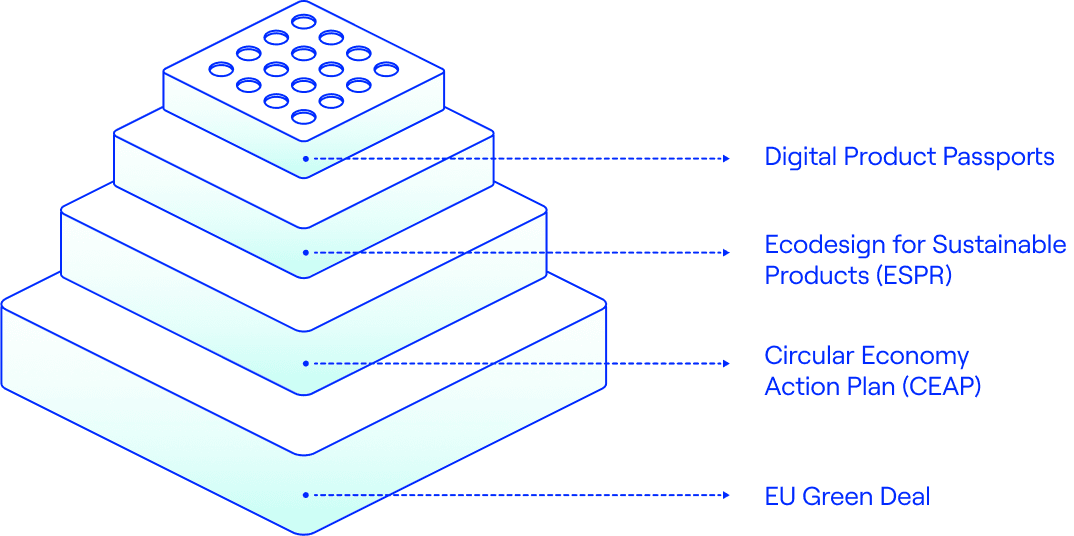
Situated under the European Green Deal and considered a replacement for the EU's 2018 Non-Financial Reporting Directive (NFRD), the CSRD is the cornerstone of the EU's vision for a sustainable economy. Since January 2023, the EU has required companies to disclose information on risks and opportunities arising from social and environmental issues, as well as the impact of their activities on people and the environment. The CSRD extends scope to all publicly listed companies and large companies meeting certain revenue thresholds.
Over 50,000 Businesses In The Green Fold
Moving beyond the NFRD, which required only large public-interest companies with over 500 employees to report, the CSRD brings approximately 50,000 companies into compliance. Non-EU companies generating 150 million+ euros in revenue within the EU are also required to comply. Unlike the NFRD, the CSRD introduces mandatory external auditing of sustainability reports and digital tagging of information to be fed into a central system. Companies must report on financial risks created by climate-related events and the impacts of corporate activity on people and the environment.
| Aspect | NFRD (Previous) | CSRD (New) |
|---|---|---|
| Scope | Large public-interest, 500+ employees | All listed + large companies, ~50,000 total |
| Non-EU companies | Not covered | 150M+ EUR EU revenue |
| Auditing | Not required | Mandatory external audit |
| Digital tagging | Not required | Required for central system |
European Sustainability Reporting Standards
The EU has introduced the European Sustainability Reporting Standards (ESRS) to ensure standardised reporting. Companies must include comprehensive sustainability statements covering general disclosures with both impact materiality and financial materiality (the double materiality approach), industry-specific disclosures tailored to certain sectors, and custom disclosures reporting specific impacts, risks, and opportunities unique to their operations. The double materiality approach requires extending reporting to the entire value chain, including all business relationships.
- General Disclosures: Impact and financial materiality across value chain
- Industry-specific Disclosures: Tailored standards for certain sectors
- Custom Disclosures: Impacts, risks, and opportunities unique to operations
CSRD Challenge Becomes Blockchain Opportunity
The scope and detail of reporting standards mean businesses face a very real challenge of collecting, processing, and reporting data. This is amplified massively for companies with extensive value chains -- the reporting company bears the burden of disclosing material information on operations of both direct and indirect business relationships upstream and downstream. Imagine a multinational like Nestle reporting on over 2,000 products with a value chain including over 5 million farmers in rural areas. Beyond production, companies must also report on employment practices, health and safety processes, and all facets impacting people and the environment.
How Blockchain Can Help With CSRD
Blockchain provides immutable audit trails where sustainability data like emissions or energy usage, once logged, is there for good -- no edits, no deletes. Decentralised verification means multiple parties (regulators, auditors, even competitors) verify new data entries rather than a single authority. Smart contracts can automate the reporting process, executing actions automatically when conditions are met -- like releasing quarterly data or alerting companies if emissions exceed limits. Blockchain provides unmatched traceability across the entire value chain, from raw material extraction to end-of-life. Standardised data frameworks facilitate seamless cross-border reporting. And integrating blockchain with IoT devices can provide real-time monitoring of water usage, emissions, and more.
- Immutable Audit Trails: No edits, no deletes, verifiable history
- Decentralised Verification: Multi-party data validation
- Smart Contracts: Auto-pilot compliance and reporting
- Value Chain Traceability: Track from extraction to end-of-life
- Standardised Data: Seamless cross-border information sharing
- IoT Integration: Real-time environmental monitoring on-chain
Fostering A Genuine Culture of Sustainability
By integrating blockchain into the CSRD and ESRS frameworks, sustainability reporting is transformed from a once-a-year chore to a real-time, automated, unalterable ledger of environmental impacts and social governance. Blockchain brings a level of clarity that was previously unattainable. As blockchain continues to unfold its potential, it may find its place by enabling trust and fostering a genuine culture of sustainability -- turning corporate accountability from aspiration into verified reality. For the product-level side of the same value-chain data, see our comparison of Digital Product Passport software.
Key Takeaway
Blockchain transforms CSRD compliance from a manual reporting challenge into automated, real-time, verifiable sustainability tracking across the entire value chain.