Privacy-preserving
event streaming.
It runs next to the systems you already have, inside and between organisations. Each party sees only what it needs, with privacy-enhancing technologies built in.

Trusted by government and industry




mintBlue turned our nightmare of invoice exchanges into a dream of automation. Now we strive to make taxation less of a headache for everyone involved.
Claire Arens
Innovation & Strategy, Netherlands Tax Administration
Built for tax, fraud and identity data.
Real-time VAT verification, built with the Netherlands Tax Administration (Belastingdienst), won an Innovation Award from the Dutch Ministry of Finance.
Our customer stories cover fraud signals, passport photo origin and emissions data across supply chains.
How it connects
From your systems to theirs.
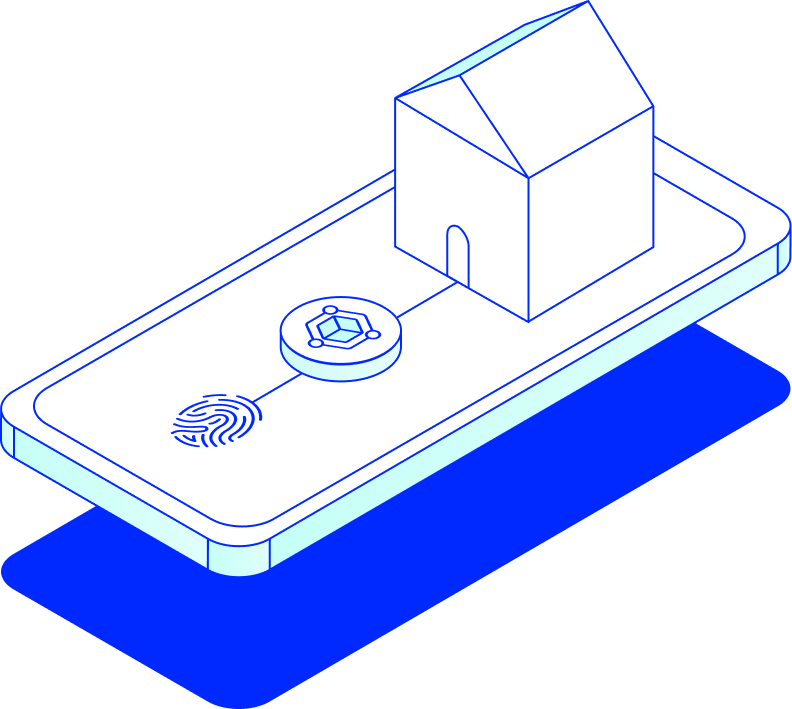
Nothing is migrated and no central database is added. mintBlue picks up what you choose to share, delivers it to the departments and organisations entitled to it and keeps the proof.
- 01
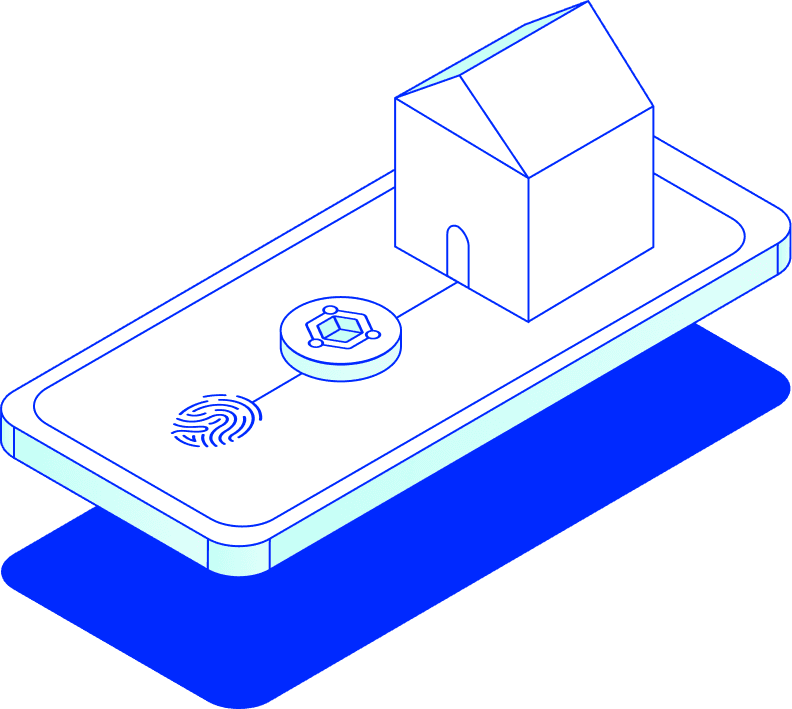
A connector in your own environment
It runs next to the databases and business systems you already have, picks up the changes you choose to share, encrypts each field and signs the change at the source.
- 02

An event stream between departments and organisations
Signed changes travel peer-to-peer to whoever is entitled to them, in the order they happened, with no broker or hub you have to trust.
- 03

An audit trail of every exchange
Who shared what, with whom, when and on which mandate is recorded in a tamper-evident audit trail that an auditor or supervisor can follow as it happens, without opening the data.
Privacy-enhancing technologies (PET), in three layers.
Every exchange runs on the same event stream, and each layer adds to the one below.
01
Selective disclosure
Share only what is needed. Each field has its own key, so a department or organisation opens only the facts it is entitled to, and every request is checked against its mandate first.
- Field-level encryption
- Keys per recipient
- Signed requests
- Mandates
02
Auditing
Prove what happened. Every exchange is signed and recorded in a tamper-evident audit trail, which auditors and supervisors can check in real time without opening the data.
- Signed events
- Tamper-evident audit trail
- Audit-only access
- Real-time supervisor access
03
Multi-party computation (MPC)
Compute together without pooling data. Organisations learn whether they hold the same case, and a match only shows when enough of them hold it.
- Blinded tokens (OPRF)
- Threshold matching
- MPC over new events, not whole datasets
The parts of the platform.
Each part has its own page, with the detail an architect will ask about.
Sharing now means copying. Proof comes afterwards.
Every copy sent to another department, a partner or a central database is another place where data can leak or drift. When an auditor asks what happened, someone searches through mails, exports and logs that do not match.
With mintBlue next to your systems, data stays with its owner and the proof is made when the exchange happens.
Copy and reconcile
- Data copied to partners or a central database
- Every party keeps its own log, and the logs disagree
- Proof assembled afterwards from mails and exports
- Access agreed on paper and checked by sampling
Share and prove
- Data stays with its owner
- Every party follows the same ordered record
- Proof made at the moment of the exchange
- Each request checked against its mandate
How mintBlue compares
Where the data sits
- Central data hub:
- Copied into the hub
- Point-to-point APIs:
- At the source, pulled on request
- mintBlue:
- With its owner; others receive only their fields
What sits in the middle
- Central data hub:
- The hub and its operator
- Point-to-point APIs:
- Nothing, but every pair needs its own link
- mintBlue:
- No operator who can read or reorder; peer-to-peer between the parties
When changes arrive
- Central data hub:
- At the next sync
- Point-to-point APIs:
- When someone asks
- mintBlue:
- As they happen, in order
Proof afterwards
- Central data hub:
- The operator's logs
- Point-to-point APIs:
- Each party's own logs, which may disagree
- mintBlue:
- One tamper-evident audit trail every party can check
Who may ask what
- Central data hub:
- Set by the operator
- Point-to-point APIs:
- Agreed per link
- mintBlue:
- Checked against a mandate on every request
The next organisation
- Central data hub:
- Another copy in the hub
- Point-to-point APIs:
- Another link to build
- mintBlue:
- Another connector on the same protocol
A simplified comparison. Hubs and APIs do their job well; the differences show when several departments or organisations need the same proof.
Frequently asked questions
Getting connected
Proof and control

Next step
Map one exchange with us.
Bring one exchange that has to be proven: who sends what, to whom and on which basis. We sketch where the connector sits next to your systems and what the audit trail would show.
Next step
Map one exchange with us.
Bring one exchange that has to be proven: who sends what, to whom and on which basis. We sketch where the connector sits next to your systems and what the audit trail would show.