An audit trail of
every exchange.
Every exchange is signed and recorded in a tamper-evident audit trail. Auditors and supervisors can follow it in real time, without opening the data.

Trusted by government and industry







mintBlue turned our nightmare of invoice exchanges into a dream of automation. Now we strive to make taxation less of a headache for everyone involved.
Claire Arens
Innovation & Strategy, Netherlands Tax Administration
Today, proof is assembled after the fact.
When an auditor or supervisor asks what happened, teams search through mails, exports and logs that each department or organisation keeps for itself. Those logs do not match, can be changed and arrive late, so oversight works on samples and on trust.
When the proof is made at the moment of the exchange, supervision can rely on more certainty up front instead of more data afterwards.
Proof afterwards
- Every organisation keeps its own logs
- Logs that can be edited or lost
- Evidence gathered from mails and exports
- Supervisors receive copies of whole files
Proof at the source
- One audit trail every party can check
- Tamper-evident for every party
- Recorded at the moment of the exchange
- Supervisors see what they need, when they need it
What the audit trail records.
What an auditor can check for every exchange, without opening its content.
01
Every exchange on the record
Each entry records who shared what with whom, when and under which mandate. The content stays encrypted, so an auditor can check the trail while the data stays closed.
02
A mandate on every exchange
Before a change is accepted, the receiving side checks the signature and the mandate. A request with an expired or missing mandate is refused.
03
Replay to the same result
Every party follows the same ordered log. Replaying it gives the same outcome every time, so anyone with access can see how a result came about, and a deviation shows up.
04
On a public log
Signatures and timestamps sit on a public, append-only log, so the proof can be checked without an account.
How an exchange is recorded
From request to proof.
What happens to one exchange between two organisations, and what an auditor sees afterwards.
- 01
Sealed and signed
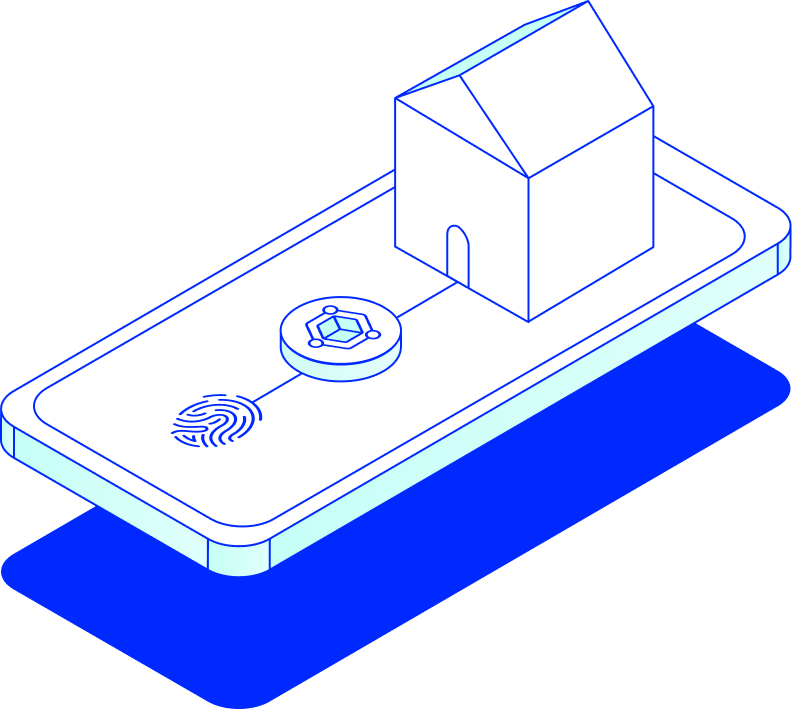
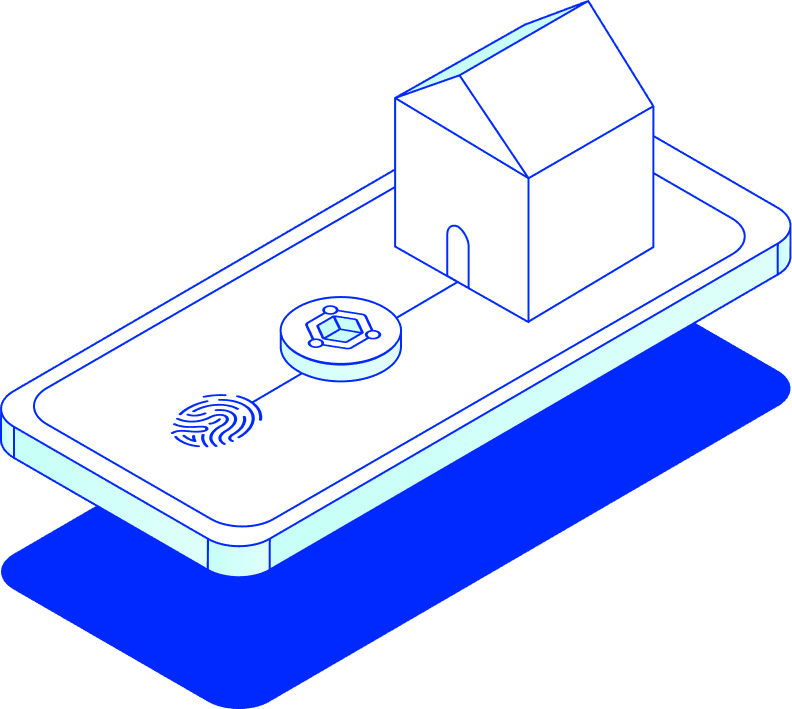
The sending organisation's connector encrypts the fields and signs the exchange with its own key, together with the mandate it relies on.
- 02
Checked on arrival
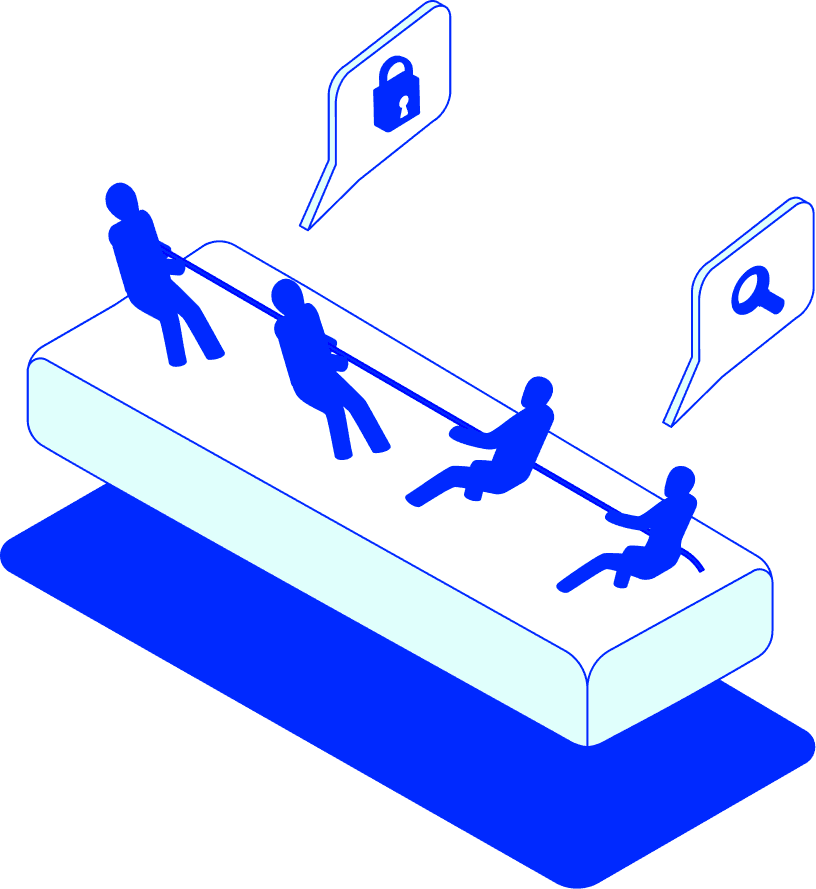
The receiving connector checks the signature and the mandate. Only a valid exchange is accepted and applied.
- 03
Recorded in order
The exchange gets its place in one shared order, with a timestamp and a proof on a public, append-only log that nobody can change unnoticed.
- 04

Checked by whoever needs to
An auditor or supervisor can follow the trail and check each exchange against its mandate. Opening the content takes a request and a permission, both recorded in the audit trail, and the organisation that holds the data logs the opening itself.
How it compares with logs and audits
Who can change it
- Application logs:
- The system's administrators
- Periodic audit:
- Whoever prepares the export
- mintBlue audit trail:
- Nobody, without it showing
When oversight happens
- Application logs:
- When someone looks
- Periodic audit:
- Periodically, on samples
- mintBlue audit trail:
- As it happens
What the auditor receives
- Application logs:
- Log files and exports
- Periodic audit:
- Copies of selected files
- mintBlue audit trail:
- The trail, and only the fields it is entitled to
Shows the mandate
- Application logs:
- Rarely
- Periodic audit:
- On paper
- mintBlue audit trail:
- With every exchange
Across departments and organisations
- Application logs:
- Each keeps its own
- Periodic audit:
- One party at a time
- mintBlue audit trail:
- One trail every party can check
Personal data
- Application logs:
- Often in the logs
- Periodic audit:
- In the copies
- mintBlue audit trail:
- Encrypted, opened only on a recorded request
A simplified comparison. Good logging and good audits stay necessary; the audit trail gives both one shared record to work from.
Frequently asked questions
Oversight
Technical
Next step
Start with what your auditor asks for.
Tell us what your auditor or supervisor needs to see, and what has to stay inside your organisation. We set up the audit trail for one exchange.
Next step
Start with what your auditor asks for.
Tell us what your auditor or supervisor needs to see, and what has to stay inside your organisation. We set up the audit trail for one exchange.