A connector next to
your own databases.
It streams the changes you choose to other departments and organisations. Your systems stay as they are, with an operational data store in your environment.
Next to your databases
Works on the relational databases and business systems you run today.
Only what you choose
You decide which changes and which fields leave.
Signed at the source
Each change is encrypted and signed before it leaves.
One shared order
Every party's data store follows the same ordered stream.
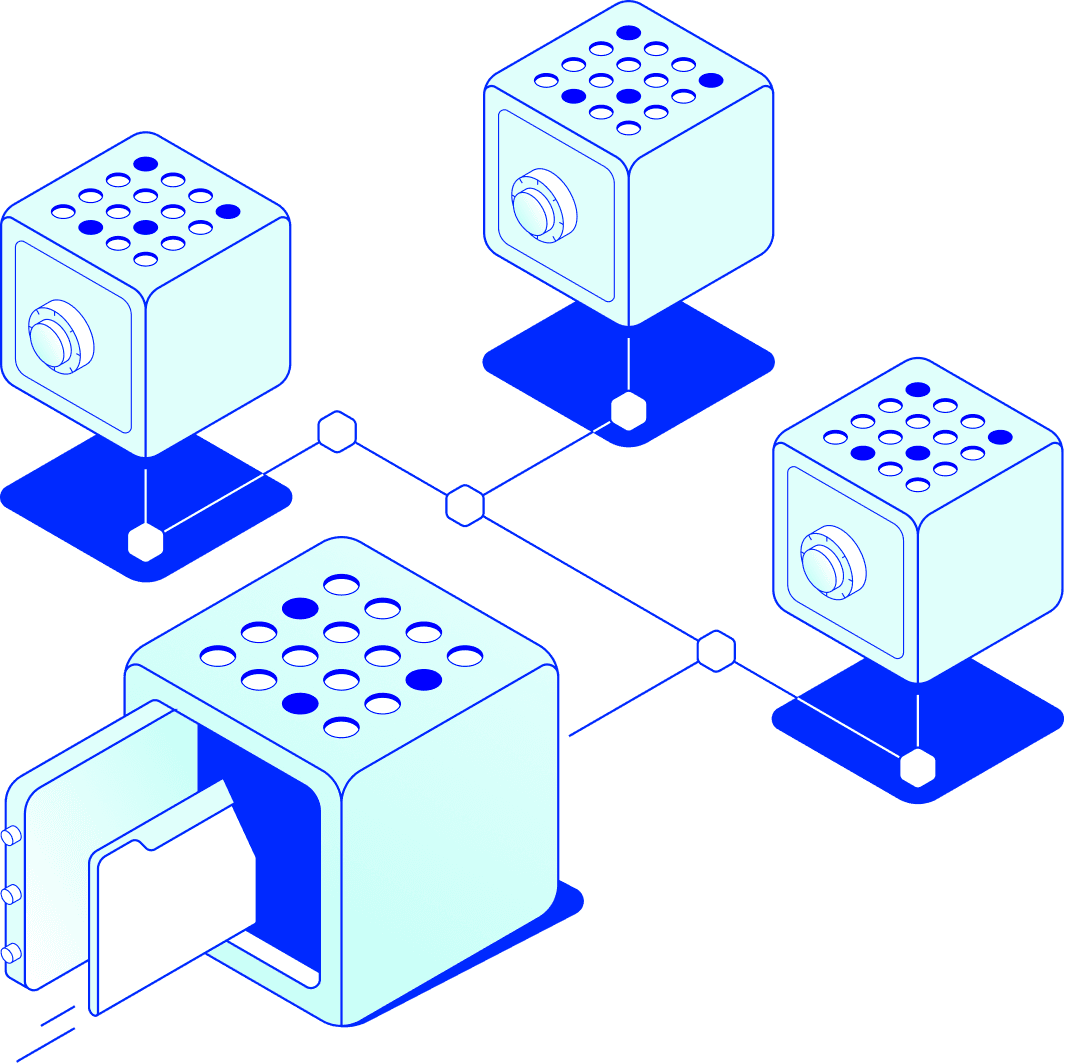
Each party keeps its own version.
Data that several departments or organisations need sits in several databases, each with its own copy. Connecting them usually means a migration, a central database or a new interface per partner, and someone still reconciles the differences afterwards.
The connector leaves your databases where they are and keeps every party's data store on the same ordered stream.
Migrate or copy
- A migration before anything can be shared
- A new interface for every partner
- Copies in a central database
- Reconciling the differences afterwards
A connector next to your systems
- Your databases stay as they are
- You choose which changes leave
- Every party follows the same ordered stream
- The same history everywhere, without reconciling
What the connector does.
One small service per organisation, running in your own environment.
01
Reads from the systems you have
It connects to your relational databases and business systems and picks up the changes you mark for sharing. Nothing has to be rebuilt as events first.
02
Encrypts and signs at the source
Data is encrypted under keys you control before it leaves your environment, and each change is signed with your organisation's key.
03
Keeps an operational data store
It keeps the current version of what you share and receive, built from the same ordered event stream every other party follows. Your own systems can query it locally.
04
Built and run with you
We build the connector for your systems and run it in your environment, on your premises or in your cloud. You choose where each field is stored.
How the connector compares
Changes to your systems
- Central database:
- A migration or a full copy
- An interface per partner:
- New code for every partner
- mintBlue connector:
- No rebuild; it runs next to them
What leaves your organisation
- Central database:
- Full records
- An interface per partner:
- Whatever the interface returns
- mintBlue connector:
- Only the fields you choose
One version for everyone
- Central database:
- Yes, in someone else's database
- An interface per partner:
- No, every party reconciles
- mintBlue connector:
- Yes, from the same ordered stream
A simplified comparison of common patterns. Real set-ups vary.
Frequently asked questions
Architecture
Running it
Next step
Pick one system and one partner.
Tell us which system holds the data and who needs it. We map where the connector sits and which fields leave.
Next step
Pick one system and one partner.
Tell us which system holds the data and who needs it. We map where the connector sits and which fields leave.