Engineering deep dives, compliance insights, and product updates from the mintBlue team.
Real-time VAT collection system developed with the Dutch Tax Authority wins the Ministry of Finance Innovation Award, proving that tax compliance can become invisible.
By Niels van den Bergh
UTXO vs account based architecture decides your throughput ceiling, privacy model and admin burden. Three families, not two. Read the comparison.
Secure multi-party computation (Roseman Labs) computes in the blind. mintBlue streams blinded, provable data so MPC can scale. Where each fits.
Agentic commerce explained: how AI agents pay via x402, AP2 and card networks, and the identity, mandate and audit-trail layer the race skipped.
Data provenance proves where data came from and that it has not changed, instead of guessing what is fake. A plain guide to how it works and why it matters.
Data minimization means holding only what you need. A plain guide to GDPR Article 5(1)(c), the honeypot risk, and how to minimise data and still act on it.
AI agents can pay before you know who they are. Know your agent means verified identity, a clear mandate and an audit trail of what it did.
Digitale soevereiniteit klinkt goed, maar veel ervan is schijn. Een datacenter in Europa is nog geen zeggenschap. Zo toets je het verschil.
Wat is horizontaal toezicht en waar wringt het? En de volgende stap: hetzelfde vertrouwen, maar met wiskundig bewijs in plaats van afspraken.
Verifiable credentials let you prove one fact without handing over everything. A plain guide to how they work, eIDAS 2.0, the EUDI wallet and real uses.
Een logbestand vertelt wat er staat, een audittrail bewijst wat er gebeurd is. Ontdek het verschil en wat een onweerlegbaar auditspoor echt vereist.
ViDA verplicht real-time btw-rapportage vanaf 2030. Wat het is, en hoe je eraan voldoet zonder je transactiedata in een centrale bak te leggen.
ViDA makes real-time VAT reporting law from 2030. What it is, and the privacy-friendly way to comply without pooling your transaction data.
Seven DPP platforms compared for EU ESPR and Battery Regulation compliance, assessed on coverage, verifiability, supply-chain data collection and pricing.
A data clean room solves a trust problem by inserting an operator you have to trust. When one is the right call, how the platforms compare, and the alternatives.
Choosing the wrong blockchain platform wastes budget, delays programmes, and erodes stakeholder trust. This guide shows you what to evaluate.
Learn how blockchain document verification creates tamper-evident proof of integrity across finance, legal, healthcare, and supply chain.
Anchor data to the blockchain using a simple REST API, no smart contracts, no Solidity, no gas fees. A practical guide for enterprise teams.
Learn how blockchain creates tamper-proof audit trails for enterprises, covering use cases from financial monitoring to document lifecycle management.
How blockchain timestamping works, its legal standing under eIDAS and EU case law, and how compliance teams use it for legally binding audit trails.
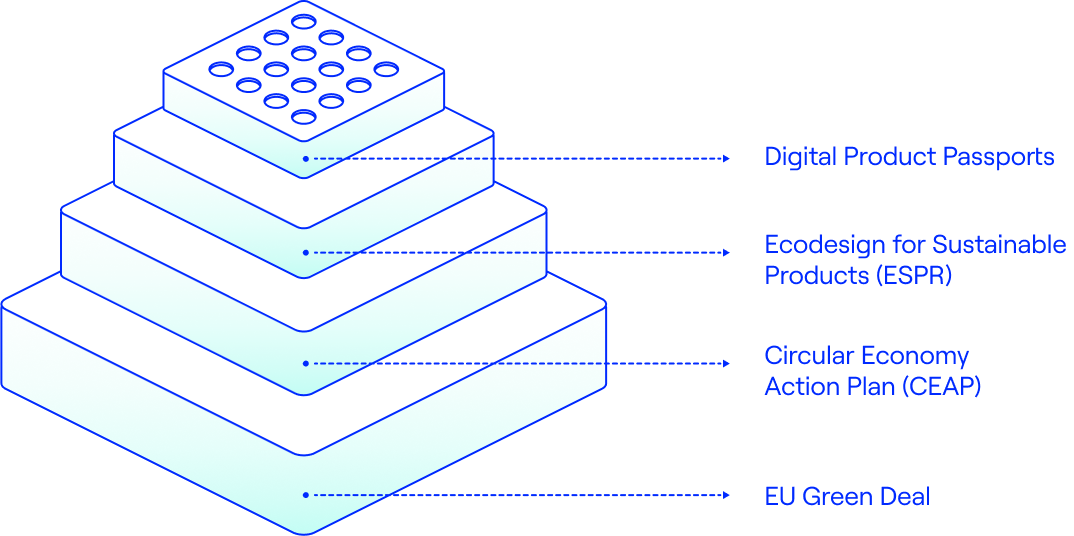
Why distributed ledger technologies are the perfect infrastructure for the EU's upcoming Digital Product Passports, enabling traceability, transparency, and circular economy compliance.
How distributed ledger technologies can future-proof the EU's Data Governance Act by enabling secure, transparent, and efficient cross-border data sharing.
By Rachel Byfleet
Learn how NGOs like the Red Cross and UNICEF are using blockchain to boost transparency, efficiency, and impact in their global humanitarian efforts.
By Sam Liddell
We're entering a world where businesses aren't measured solely by their profits, but also by their impact on the planet. And, in fact, a company's environmental policies can result in higher profits.
From voluntary carbon credit markets, to supply chain traceability and effective ESG reporting -- explore how blockchain is driving ESG solutions forward.
In an eco-friendly plot twist, the EU has rolled out the Corporate Sustainability Reporting Directive (CSRD) -- a blueprint that's got big companies talking about more than just profits.
How blockchain can help bank the unbanked. Financial inclusion remains a pressing global challenge for the billions of people around the world who lack access to basic financial services.
Supply chain transparency and management was one of the earliest cited examples of an industry that could benefit from blockchain. Blockchain is generally implemented in supply chains as a form of track and trace.
When many people start researching enterprise blockchain, they inevitably come across the questions of Public vs. Private Blockchain and which one is right for their use case.
The public blockchain revolutionises accounting by introducing a single shared base layer of bookkeeping. A global public blockchain network facilitates peer-to-peer trusted data exchange.
mintBlue just set a new World Record: we pushed the largest volume of transactions (a casual 50.53 Million) in 24 hours onto the public blockchain.
mintBlue selected by VISMA | yuki to incorporate blockchain technology into its accounting suite. This integration allows the authenticity of receipts and invoices to be automatically verified.
By mintBlue